Things to Do in Honiara in September
September weather, activities, events & insider tips
Low Season · Budget Friendly
September Weather in Honiara
Long-run averages for September
88°F (31°C)
High Temp
71°F (22°C)
Low Temp
3.5 inches (89 mm)
Rainfall
79%
Humidity
14
Sunny-Day UV
⚠ Malaria transmission stays active year-round in the Solomon Islands. Urban Honiara included. Consult a travel medicine provider. Begin prescribed antimalarial prophylaxis before arrival. DEET repellent and long sleeves at dawn and dusk form your secondary defence.
⚠ September's clear skies mean brutal UV exposure. Little cloud cover. Unprotected skin burns within fifteen minutes at midday. Cover up. Wear a hat. Reapply sunscreen aggressively. Water reflection intensifies exposure. Take this seriously.
⚠ Coral cuts and marine abrasions infect fast in tropical water. Clean any reef break immediately with antiseptic. Watch for red streaking or warmth signalling infection. Local medical facilities can treat infections. Prevention beats treatment in Honiara every time.
Making the most of September in Honiara? Browse tours and activities in Honiara on GetYourGuide.
Is September Right for You?
Weigh the advantages and considerations before booking
Advantages
- + September is Honiara's driest month, with just 3.5 inches (89 mm) of rainfall compared to the January-through-March deluge that dumps over 11 inches (280 mm) monthly. The rain that does come tends to fall in short, sharp bursts rather than the grey all-day soakings of the wet season, so mornings are reliably clear and outdoor plans rarely get washed out entirely.
- + Humidity drops to 79 percent, the lowest you will find in Honiara all year. That might not sound like relief on paper. But the difference is tangible: mornings along Mendana Avenue feel breathable before the midday heat sets in, and the air lacks the suffocating weight that presses down on the city from December through April.
- + Underwater visibility around Guadalcanal reaches its annual peak as reduced river runoff clears the coastal waters. The WWII wrecks at Bonegi Beach and the reefs off Savo Island sharpen into focus, and operators are more likely to run full dive schedules without weather cancellations.
- + You will have Honiara largely to yourself. September sits in a gap between the Australian school holiday bump and the November-December uptick, and the Solomon Islands remain one of the least-visited Pacific nations. The Central Market, the war memorials, the waterfall trails: expect to share them with locals, not tour groups.
Considerations
- − The equatorial sun at this latitude is punishing, and clear September skies mean fewer clouds to soften it. Bare skin burns in under fifteen minutes at midday, and the glare off the water around Point Cruz harbour can leave your eyes aching by afternoon if you skip proper sunglasses. This is not a tan-building destination. It is a damage-prevention one.
- − Tourism infrastructure in Honiara remains limited compared to almost any other Pacific capital. Footpaths end without warning, signage to attractions is sparse or absent, roads outside the Mendana Avenue corridor are unpaved and rutted, and power outages still interrupt evenings. Travelers expecting Fiji-level polish will need to recalibrate fast.
- − Malaria is present year-round in the Solomon Islands and September's dry warmth does not reduce the risk. Mosquitoes breed in standing water that persists even in the driest months, and rural areas around Guadalcanal carry higher transmission rates than the town centre. Prophylaxis is not optional. It is a baseline requirement.
Settled on September? Compare hotel prices in Honiara for your dates on Trip.com.
Best Activities in September
Top things to do during your visit
September in Honiara arrives at the tail end of the dry season. The capital of the Solomon Islands settles into its most comfortable stretch of weather. Rainfall drops to its annual low. The air loses the clinging weight it carries from November through April, when the northwest monsoon can dump three times as much water on the corrugated rooftops of Chinatown and the palm-thatched stalls of the central market. Temperatures hold steady in the low thirties. Warm enough that the coconut palms along Mendana Avenue cast welcome shade. The reduced moisture means mornings break with an unusual clarity. The ridgeline behind the city sits sharp against a sky that stays blue well past noon. The southeast trade winds push a salt-edged breeze across Iron Bottom Sound. The ocean takes on the flat turquoise of low-swell months. Good for shore dives at Bonegi or a boat trip out to Savo Island's steaming volcanic vents. The central market, a concrete hangar near Point Cruz where women from the Weather Coast and the western provinces spread out sweet potato, cassava, pawpaw, and bundles of slippery cabbage on woven mats, operates at a pace that invites lingering rather than elbowing. The smell of betel nut and lime paste drifts across the aisles. At the cooked-food section the char of grilled reef fish and the coconut-milk sweetness of steamed root vegetables fill the humid air beneath the roof. Evenings along the waterfront carry the low hum of generators and the distant thump of music from the handful of bars near the yacht club. Honiara is not a city that pretends to nightlife in any conventional sense. Its pleasures are daytime ones, rooted in the water, the wartime landscape, and the slow ritual of shared meals. Accommodation ranges from modest guesthouses to a small number of mid-range and higher-end hotels clustered along the coast road. September's lower visitor numbers mean availability is rarely a problem. Safety follows the pattern of most Pacific Island capitals. Straightforward common sense applies, after dark and in the settlements east of the Mataniko River. Daytime Honiara is navigable on foot and by minibus without anxiety. What pulls most visitors to Guadalcanal is the weight of what happened here between August 1942 and February 1943, the campaign that turned the Pacific war. The island's north coast is layered with it. Rusted landing craft half-swallowed by mangrove roots. Overgrown gun emplacements on ridgelines where the jungle has closed back in. The silent geometry of memorial gardens where white crosses stand in grass kept short by hand. September's dry conditions make the battlefield trails more passable than they are during the wet months, when red clay turns the hillside tracks into chutes. Beyond the war sites, Honiara offers the reef systems and waterfalls that define the Solomons. Tenaru Falls, a two-tiered cascade reached by a muddy trail through coconut plantations east of Henderson Airport, rewards the walk with a deep freshwater pool cold enough to shock after the heat of the road. The restaurants worth seeking out lean toward Chinese-Solomon fusion and simple grilled seafood. The best meals often come from places with no sign at all, just a counter and a woman ladling fish stew over rice. The beaches nearest to Honiara are not the white-sand postcards of Gizo or Munda further west. The dark volcanic sand at Bonegi, scattered with coral rubble and the rusting bow of a Japanese transport ship, has a stark beauty that belongs to no other coastline.

East Honiara Historic World War II Battlefields Tour
culturalThe East Honiara Historic World War II Battlefields Tour follows the ridgelines and river crossings where American and Japanese forces fought some of the most brutal engagements of the Guadalcanal campaign. A local guide walks you through sites like Bloody Ridge, where the tall kunai grass still grows over foxholes you can trace with your feet, and the American War Memorial on Skyline Ridge, where bronze plaques face out across Iron Bottom Sound toward the dark shapes of Savo and Florida Islands. The tour covers Henderson Field, the airstrip whose capture triggered the entire campaign, and pauses at Japanese memorials where incense stubs and weathered origami cranes sit among the roots of banyan trees. You come away not with the abstraction of a textbook but with the physical scale of the thing. The steep, slippery ravines soldiers crossed under fire. The heavy heat that made every movement exhausting. The sound of wind through jungle canopy that has not changed in eighty years.
Standing on the actual ground where the Pacific war turned, feeling the gradient of Bloody Ridge under your boots, hearing nothing but wind and birds where artillery once roared, collapses the distance between history and the present in a way no museum can.
Insider tip: Ask your guide to stop at the Vilu War Museum on the return route, an open-air collection of rusted aircraft, anti-aircraft guns, and torpedo casings scattered beneath coconut palms. It is not always included but never refused, and the caretaker's stories add a local dimension the battlefield sites lack.
This month: September's low rainfall makes the hillside battlefield trails firmer and less slippery than during the wet season months, when red clay can turn steep sections treacherous.

Honiara City-Half Day City Tour
guided_experienceThe Honiara City Half Day Tour compresses the capital's scattered points of interest into a guided loop that most independent visitors would spend days piecing together by minibus and on foot. It typically begins at the National Museum, a modest building near Mendana Avenue where shell-money coils, carved war canoes, and WWII relics share space in dim, fan-cooled rooms that smell of old wood and exhibit glue. From there the route threads through Chinatown's narrow commercial streets, past shops stacked with tinned fish and bags of rice, their doorways open to the warm air, and on to the central market, where the colors alone justify the stop. Piles of golden pawpaw. The deep purple of eggplant. Scarlet betel nut. The pale green of freshly husked coconuts split open with a machete on the spot so you can drink the water still cool from the shell. The tour rounds out with the parliament building, the botanical gardens, and a coastal drive past the yacht club toward Point Cruz, offering the kind of orientation that makes every subsequent day in Honiara more navigable.
Honiara does not yield its texture to a drive-through. This tour cracks it open through a local guide who knows which market vendor will let you taste coconut cream scraped fresh from the shell and which backstreet leads to the best view of the harbor.
Insider tip: Bring a small bag for the market. Guides often build in time for you to buy fresh tropical fruit, and the pawpaw and pineapple here are noticeably sweeter than anything exported, eaten best on the spot with sticky fingers.

Airport Transfers from Honiara International Airport to Hotel
transportThe airport transfer from Honiara International Airport to your hotel eliminates the only stressful moment in a Solomon Islands trip. The scrum of drivers and touts outside Henderson Airport's small terminal, where the humid air hits you like a wall the moment you step off the plane and the unpaved lot offers no obvious signage or queue. A pre-arranged driver meets you inside or at arrivals with your name, loads your bags, and covers the roughly twenty-minute drive along the coast road into central Honiara, a stretch that passes coconut plantations, roadside stalls selling drinking coconuts, and the first glimpses of Iron Bottom Sound's flat, glinting water through gaps in the vegetation.
After a long series of connections to reach one of the Pacific's most remote capitals, stepping into a waiting vehicle with a driver who already knows your hotel removes the one friction point that otherwise greets you in equatorial heat with luggage in hand.
Insider tip: Confirm your pickup the day before arrival. Mobile coverage on Guadalcanal can be inconsistent, and a same-day booking risks the driver not receiving the notification in time.
Where to Stay in Honiara in September
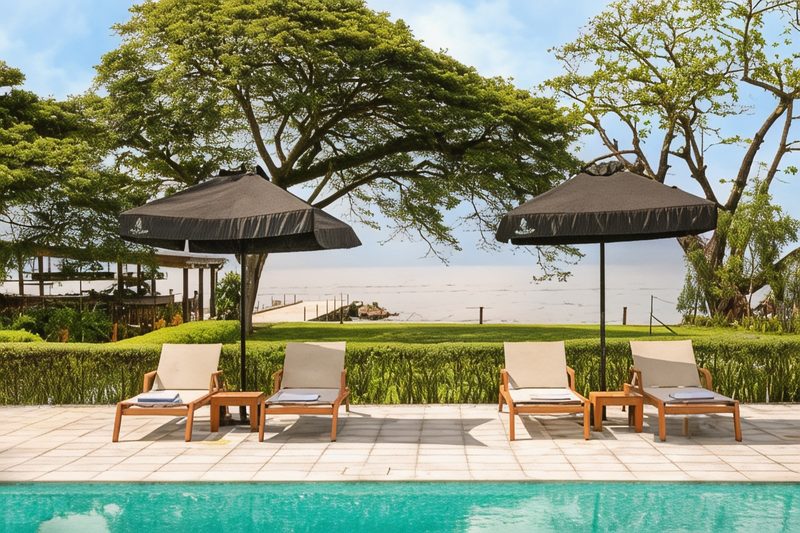
Hand-picked hotels across price tiers for September travellers.
Packing Checklist
Bookmark this page — your progress is saved between visits
Need the full list with shopping links?
Climate-specific gear, brand recommendations, and what to leave at home.
View Honiara Packing List →Essential Tips
Insider knowledge and common pitfalls to avoid
Insider Knowledge
The Central Market is best on Saturday mornings before 7 AM, when outer-island sellers who arrived by boat overnight lay out produce you will not see during the week: wild forest ferns, freshwater prawns from Guadalcanal rivers, and hand-smoked fish wrapped in leaves that smell of charcoal and salt. By 9 AM the Saturday crowd is crushing. The best items are gone.
Honiara effectively shuts down on Sundays. Shops close. Transport thins to almost nothing. Most restaurants outside larger establishments do not open. Plan your rest day accordingly, or use Sunday for a pre-arranged guided trip where operator handles logistics. Attempting to freelance a Sunday in Honiara leads to a lot of closed doors and empty streets.
Learn three phrases in Pijin and use them constantly: 'hao nao' (how are you), 'tanggio tumas' (thank you very much), and 'wanem nao?' (what's this?). The response from market sellers, guides, and minibus drivers shifts immediately. English is widely understood. Pijin is the language of warmth. Using even a few words signals that you are not treating the place as a backdrop for photographs.
Minibuses along main coastal road are Honiara's actual public transport and cost very little. They have no fixed stops or schedules. Stand on roadside, flag one down by raising your hand, and tell driver where you are going. They will tell you if they pass it. Do not wait for bus at nonexistent bus stop. Stand where drivers can see you and where they have room to pull over safely.
Avoid These Mistakes
Forget Southeast Asian tourist hubs. Honiara runs differently. No tuk-tuks. No hostel strips. No backpacker infrastructure. ATMs outside Mendana Avenue's central banks rarely accept foreign cards. Arrive with enough local currency or US dollars for your first few days. Confirm ATM compatibility with your bank before departure.
Walking alone after dark outside Mendana Avenue and immediate hotel areas is unwise. Honiara stays generally safe during daylight. Street lighting is minimal to nonexistent in most neighbourhoods. Opportunistic theft rises sharply after sunset. Take a taxi. Arrange transport through your accommodation. Plan evening movement carefully.
Skipping antimalarials because the trip is short is a mistake. Malaria ignores your itinerary. One infected bite on night two can ruin everything. Daily pills are trivial. Falciparum malaria in a country with limited emergency capacity is not. Take the medication.
Short on time? See day trips around Honiara on GetYourGuide.
Ready to plan your trip to Honiara?
Now that you've got the research covered, here's where to go next.
Explore More Activities in Honiara
Didn't see anything interesting yet?
Browse Viator's full catalog of tours, day trips, food experiences, and private guides in Honiara.
See All Honiara Tours on Viator