Things to Do in Honiara in February
February weather, activities, events & insider tips
Low Season · Budget Friendly
February Weather in Honiara
Long-run averages for February
88°F (31°C)
High Temp
74°F (23°C)
Low Temp
11.4 inches (290 mm)
Rainfall
85%
Humidity
15
Rainy Days
16
Sunny-Day UV
⚠ February falls within the South Pacific cyclone season, which runs November through April. While a direct cyclone hit on Honiara is statistically uncommon in any given year, tropical depressions and peripheral effects from nearby systems can bring sustained heavy rain, dangerous seas, and multi-day disruptions to air and boat travel. Monitor weather advisories from the Solomon Islands Meteorological Service throughout your trip and have a flexible itinerary.
⚠ Heavy rainfall can cause flash flooding in low-lying parts of Honiara, along the Mataniko and Lungga river floodplains. Roads in these areas become impassable quickly, and the red laterite soil turns to deep, vehicle-trapping mud. Avoid camping near rivers and do not attempt to ford swollen river crossings on foot or by vehicle.
⚠ Mosquito-borne diseases including malaria and dengue fever peak during the wet season. February's standing water and high humidity create ideal breeding conditions. Prophylaxis, repellent, and sleeping under treated nets are essential, not optional.
Making the most of February in Honiara? Browse tours and activities in Honiara on GetYourGuide.
Is February Right for You?
Weigh the advantages and considerations before booking
Advantages
- + February sits at the absolute bottom of the tourist calendar in Honiara. Guesthouses and lodges along Mendana Avenue and the Point Cruz waterfront tend to have open rooms without advance booking. Rates drop noticeably compared to the drier months of June through September. You will likely have dive sites, war memorials, and waterfall trails largely to yourself.
- + The wet season pushes Honiara's landscape into its most dramatic phase. The hills behind the city turn an almost unreasonable green. Mataniko Falls runs at full volume with enough force to send mist drifting 30 metres (100 ft) downstream. The jungle canopy along the Guadalcanal ridgelines fills in so thickly that the WWII-era foxholes and gun emplacements disappear under curtains of fern and vine. If you came for the Pacific wilderness, February delivers it at full intensity.
- + Water temperatures hover around 29°C (84°F) in February. Underwater visibility at the Bonegi wreck sites and the reefs off Savo Island can still reach 15 to 20 metres (50 to 65 ft) on calmer days. The warm, plankton-rich water draws manta rays closer to the reef edges. February is one of the better months for spotting them around the Iron Bottom Sound passages.
- + Tropical fruit peaks in the wet season. Honiara Central Market overflows with it. The pawpaw is so ripe the flesh splits under its own weight. The soursop has that creamy, slightly tart custard quality you only get when the fruit has had weeks of heavy rain. The ngali nut vendors roast their product over small charcoal fires that send a woody, almost buttery smoke drifting through the entire market hall. February is when you eat best at the market.
Considerations
- − February is the wettest month of the year in Honiara. 290 mm (11.4 inches) is not an abstraction. Rain arrives in heavy, vertical downpours that turn the laterite roads behind the main strip into red-orange rivers of mud within minutes. The sealed roads along the coast hold up. Anything off the main Kukum Highway toward the Guadalcanal interior becomes a serious four-wheel-drive proposition. Plan for at least half your days to be altered by rain.
- − February falls squarely in the South Pacific cyclone belt's active window, which runs roughly November through April. A direct hit on Honiara is uncommon in any single year. Tropical depressions and nearby cyclone systems can bring days of heavy wind, rough seas, and cancelled inter-island boat services. Flights between Honiara and the Western Province or Malaita can be delayed or grounded. Travel insurance that covers weather disruption is not optional.
- − The combination of 85% humidity and 31°C (88°F) heat creates a physical heaviness that first-time visitors underestimate. Walking from Point Cruz to the National Museum, a distance of maybe 2 km (1.2 miles) along the waterfront, will leave you soaked in sweat before you are halfway there. February's humidity sits at the top of the annual range. The air rarely moves enough to offer relief. You will want to schedule outdoor activity for early morning. Pause through the midday hours. Accept that you will change clothes more than once a day.
Settled on February? Compare hotel prices in Honiara for your dates on Trip.com.
Best Activities in February
Top things to do during your visit
February lands squarely in the wet season on Guadalcanal, and Honiara feels it. This is the rainiest month of the year, with an average of 11.4 inches of precipitation, nearly triple what falls in the dry months of June through September. Showers tend to arrive in concentrated afternoon downpours rather than all-day drizzle, which means mornings often break warm and still, the air thick with the scent of frangipani and damp red laterite soil. By mid-morning the heat settles at around 31 degrees Celsius, and the harbour water off Point Cruz turns a pale, silty green where freshwater runoff meets the sea. The rhythm of daily life in Honiara adjusts accordingly: the Central Market fills early, before the clouds build, with women selling betel nut wrapped in mustard leaf and tables heaped with pawpaw, soursop, and mud crabs still clicking their claws. What February lacks in dry comfort it repays in intensity. The hills behind Honiara, the Kola Ridge, Mount Austen, the Mataniko River valley, are at their most explosively green, every slope dense with broadleaf jungle and cathedral-tall banyan trees dripping with epiphytes. The rivers run high and loud, and Tenaru Falls, a popular day trip east of the capital, thunders with a force you will not see in the dry season. Nights cool to around 23 degrees but the air stays heavy, and the chorus of geckos and fruit bats carries across the corrugated-iron rooftops of Chinatown. Restaurants and guesthouses along Mendana Avenue are quieter than usual, February sits well outside the main travel window, so those who come now find Honiara more relaxed, more willing to slow down, more itself. Safety in Honiara is largely a matter of common urban sense: stick to lit areas after dark, avoid walking alone on the outskirts at night, and secure valuables. The capital is small enough that locals notice visitors and are overwhelmingly hospitable.

East Honiara Historic World War II Battlefields Tour
culturalThe East Honiara Historic World War II Battlefields Tour follows the arc of one of the Pacific War's most consequential campaigns across the ridgelines and river crossings east of the capital. You stand at the mouth of the Tenaru River, called the Ilu by locals, where the sandbar still narrows to a few paces, and a guide walks you through the August 1942 battle in the exact terrain where it happened: the coconut plantation whose rows channelled the Japanese assault, the ridge where Henderson Field's defenders held, the quiet war cemetery at Bloody Ridge where white Commonwealth crosses stand in clipped grass against a wall of green jungle. The tour continues to Vilu War Museum, an open-air collection of American and Japanese artillery, aircraft wreckage, and rusting landing craft arranged under rain trees, where you can run your hand along the pitted aluminium skin of a Grumman Wildcat and smell the iron-oxide tang of ordnance that has been weathering in tropical air for more than eighty years.
This is one of the few places on earth where a twentieth-century battlefield remains physically legible in the landscape, the same ridgelines, the same river mouth, the same coconut groves, and a knowledgeable local guide connects the terrain to the tactics in a way no book or documentary can.
Insider tip: Wear shoes with good grip and bring a rain shell, the trail to Bloody Ridge gets slick in February's afternoon rains, and the red clay stains everything it touches.
This month: February's heavy rainfall turns the Tenaru and Mataniko rivers into fast, brown torrents, which adds dramatic context to the river-crossing battle sites but can make some unpaved access tracks muddy and slow.

Honiara City-Half Day City Tour
guided_experienceThe Honiara City Half Day Tour compresses the capital's essential geography into a single morning loop, from the soaring white Parliament House on the ridge above Vavaea Point to the smoky, tarpaulin-shaded aisles of the Central Market, where the smell of roasting cassava and fresh tuna mingles with the sharp sweetness of lime. A guide steers you through the National Museum, a modest but well-curated collection of shell-money coils, war relics, and carved nguzu-nguzu canoe-prow spirit figures, then along the waterfront past the rusting hulls at Point Cruz and up to the Guadalcanal American Memorial on Skyline Ridge, where a bronze plaque faces north across Iron Bottom Sound and the breeze off the strait cuts through the heat for the first time all day. What elevates this above a simple sightseeing loop is the narration: Honiara is a city that exists only because of the war, the prewar capital was Tulagi, across the sound, and hearing that layered history while standing in the places where it happened gives the modern town a depth that walking it alone does not.
In a city with almost no signage or interpretive infrastructure, a local guide transforms a scattering of monuments, markets, and government buildings into a coherent story of war, independence, and Pacific Island urbanisation.
Insider tip: Ask your guide to stop at one of the roadside kai bars near the market for a plate of fish and rice, the portions are enormous, the fish was swimming that morning, and it is a far more genuine Honiara dining experience than the hotel restaurants along Mendana Avenue.

Airport Transfers from Honiara International Airport to Hotel
transportThe Airport Transfer from Honiara International Airport to Hotel covers the roughly ten-kilometre corridor between Henderson Field, still carrying its wartime name, and the hotel strip along Mendana Avenue and Chinatown. The drive itself is a compressed introduction to Guadalcanal: you pass through the coconut-palm flats east of the runway, where rusted Quonset-hut foundations sit in the grass, then climb a low ridge where the road opens onto a view of Iron Bottom Sound, the water glinting flat and silver in the morning or bruised grey-violet before an afternoon storm. In February the verges are overgrown and brilliant green, and the warm, wet air hits you the moment you step off the plane, a physical wall of humidity carrying the smell of woodsmoke, copra, and rain-soaked earth. A pre-arranged transfer matters here more than in most capitals: Honiara has no ride-hailing apps, no metered taxis, and no public bus service from the airport, so arriving without a plan means negotiating with freelance drivers in the terminal car park.
A reliable airport pickup eliminates the single most disorienting moment of arriving in a Pacific capital with no formal ground-transport infrastructure and turns the drive into your first guided look at Guadalcanal.
Insider tip: Confirm your pickup the day before arrival, mobile coverage on Guadalcanal can be patchy, and a same-day booking may not reach the driver in time. Also let the driver know your flight number, since the small terminal has no arrivals board visible from outside.
This month: February storms can cause localised flooding on the low-lying stretch between the airport and the Mataniko River bridge, occasionally adding delays of fifteen to thirty minutes.
Where to Stay in Honiara in February
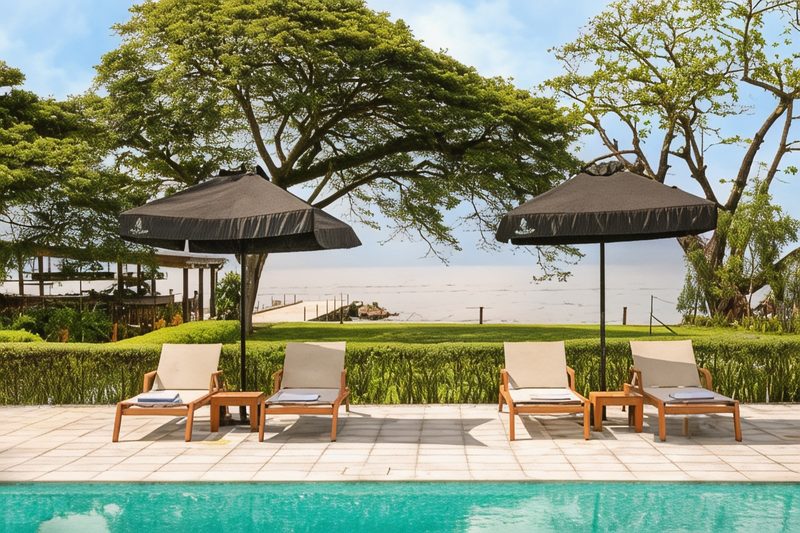
Hand-picked hotels across price tiers for February travellers.
Packing Checklist
Bookmark this page — your progress is saved between visits
Need the full list with shopping links?
Climate-specific gear, brand recommendations, and what to leave at home.
View Honiara Packing List →Essential Tips
Insider knowledge and common pitfalls to avoid
Insider Knowledge
Schedule outdoor activities between six and ten in the morning. The heat has not peaked. Overnight rain has stopped. Afternoon storms have not gathered. Locals know this. Central Market heaves at seven. It empties by noon. Match their rhythm.
Take malaria prophylaxis. Guadalcanal has one of the Pacific's higher malaria transmission rates. February's standing water swells mosquito numbers. Consult your travel doctor before flying. Sleep under a treated net even with screened accommodation. Take repellent seriously at dusk. Honiara's hospital can treat malaria. You do not want to test it.
Learn some Solomon Islands Pijin. 'Hao nao' for hello. 'Tanggio tumas' for thank you. 'Wanem nao praes' for how much. English is widely understood. Pijin signals respect. Respect opens doors that English guidebook phrases cannot.
Betel nut dominates Honiara. Chewers mix it with lime powder and mustard stick. Red spit stains every pavement. Newcomers mistake it for blood. You will be offered betel nut as a social gesture. Accept or decline politely. Either works. Understand this is social fabric, not spectacle. Too much lime burns. The buzz sits between strong coffee and mild dizziness.
Avoid These Mistakes
Avoid tight multi-island itineraries in February. Flights and boats run late. Often they do not run. Solomon Airlines' domestic fleet is small. Weather cancellations are routine in wet season. Inter-island boats stop when seas turn rough. Build one buffer day into any plan leaving Guadalcanal. Or miss your international flight from Henderson Airport.
Do not trust the tap water. Honiara's municipal supply lacks reliable treatment. February flooding contaminates wells and pipes further. Drink bottled water. Brush teeth with it. Be cautious with ice outside established restaurants. Stomach illness in this humidity, with these bathroom facilities, ruins trips.
Walking around after dark in unfamiliar areas without local guidance. Honiara is generally safe during the day. But poorly lit backstreets, around the Ranadi industrial area and some parts of White River, are best avoided at night. Stick to the waterfront strip and Mendana Avenue after sunset. Arrange transport back to your accommodation before darkness falls around six thirty.
Short on time? See day trips around Honiara on GetYourGuide.
Ready to plan your trip to Honiara?
Now that you've got the research covered, here's where to go next.
Explore More Activities in Honiara
Didn't see anything interesting yet?
Browse Viator's full catalog of tours, day trips, food experiences, and private guides in Honiara.
See All Honiara Tours on Viator