Things to Do in Honiara in January
January weather, activities, events & insider tips
Low Season · Budget Friendly
January Weather in Honiara
Long-run averages for January
88°F (31°C)
High Temp
74°F (23°C)
Low Temp
9.4 inches (239 mm)
Rainfall
87%
Humidity
15
Sunny-Day UV
⚠ Cyclone season runs November through April. January sits squarely inside it. Direct hits on Guadalcanal are rare. Tropical depressions are not. Expect heavy rain, rough seas, cancelled flights. Check the Solomon Islands Meteorological Service daily. Book flexible tickets. Have a backup plan for stuck days.
⚠ Flash floods kill. The Mataniko River valley floods fast. Eastern Honiara goes under water. Never wade through rushing water. Never drive into flooded streets. Past Januaries have drowned people here. Watch the sky. Move to higher ground early.
⚠ Mosquitoes here carry two threats. Malaria, the Plasmodium falciparum strain, spreads actively. So does dengue. Both spike in wet season on Guadalcanal. Take your pills. Slap on repellent. Sleep under nets. No exceptions.
Making the most of January in Honiara? Browse tours and activities in Honiara on GetYourGuide.
Is January Right for You?
Weigh the advantages and considerations before booking
Advantages
- + January brings the quietest tourism month in Honiara. The WWII memorial sites along the Guadalcanal ridgelines, Mataniko Falls, and the coral reefs off Bonegi sit empty. You will have them to yourself. The few travellers who arrive tend to be divers and history buffs who know exactly what they want. They are not cruise passengers on a half-day stopover.
- + Ocean temperature sits near 30°C (86°F), the warmest of the year. Visibility on sheltered reef sites inside Iron Bottom Sound still reaches 10-20 metres (33-66 ft) between storms. Time your dives to morning windows before afternoon squalls build. The soft corals off Bonegi Beach glow at their most vivid then. Japanese transport wrecks rest in 3-25 metres (10-82 ft) of water behind them.
- + Fruit season peaks in January across Guadalcanal. The Central Market on Mendana Avenue overflows with golden pawpaw, soursop, and Polynesian chestnuts still in spiky green husks. Women sit cross-legged on woven mats cracking ngali nuts fresh. Watermelons from the Guadalcanal Plains hit their sweetest. Ripe mango smells reach you from two stalls away.
- + Accommodation availability loosens considerably. Properties that fill weeks ahead during the dry-season conference calendar from June through September now take days of notice. Some offer wet-season rate reductions without being asked. You have use to negotiate. Ask.
Considerations
- − January sits squarely in Solomon Islands cyclone season, roughly November through April. Direct hits on Guadalcanal remain infrequent. Peripheral effects of regional systems still bring multi-day grey skies, swollen rivers that close trail access, and inter-island ferry cancellations that strand you for days. Flights to outlying provinces like Western Province (Munda, Gizo) face delays or short-notice cancellations by Solomon Airlines.
- − The 239 mm (9.4 inches) of rainfall falls unevenly. Storms build through late morning and unload in intense, sometimes violent downpours from early afternoon onward. Electrical storms light up Iron Bottom Sound at night. Red-clay roads in the hills behind Honiara turn slick and impassable after heavy rain. The Mataniko River flash-floods with startling speed, closing the falls trail without warning.
- − Humidity at 87% punishes. The air sits on your skin like a damp cloth from the moment you step off the plane at Henderson International. It never lifts. Walking the 2 km (1.2 miles) from Point Cruz to the National Museum along Mendana Avenue in midday heat leaves you soaked through. Mould grows on leather goods overnight in un-air-conditioned rooms. Cuts and insect bites take noticeably longer to heal.
Settled on January? Compare hotel prices in Honiara for your dates on Trip.com.
Best Activities in January
Top things to do during your visit
Honiara in January sits deep inside the wet season, and the capital of the Solomon Islands wears it openly. Afternoon downpours arrive almost daily, heavy and warm and theatrical, drumming on corrugated iron roofs across Chinatown and sending red-clay runoff streaming down the hillside roads toward Iron Bottom Sound. Average highs hold at around 31°C (88°F). The air hangs thick and warm even after dark, when temperatures barely slip below 23°C (74°F). January's rainfall, roughly 239 millimetres for the month, is lighter than February's or March's peak, but enough to keep the bush trails slick and the harbour water murky with sediment. Between squalls, the sun breaks through with an intensity that turns the sea surface into hammered silver and makes the shade of a flame tree feel earned. The wet season shapes how Honiara moves. Vendors at the Central Market stack their stalls higher with seasonal fruit. Rambutan and soursop appear alongside year-round staples like pawpaw and betel nut, whose crimson-stained husks litter the pavement in sticky constellations. The market's concrete floor stays damp. The smell of fresh tuna laid out on banana leaves mingles with wood smoke drifting from the row of women grilling cassava on charcoal braziers just outside. Local buses, dented vans with hand-painted route names, run their usual chaotic loops along Mendana Avenue. The roads west toward Bonegi and Henderson can flood after a sustained downpour, so travellers heading to the airport or the battlefields should leave generous margins. Honiara's restaurants and waterfront hotels keep their regular hours through January. Most dining options cluster along the harbour road or in the Pt Cruz area, where small Chinese-run eateries serve steaming bowls of noodle soup that taste better the wetter the day gets. What makes a January visit distinct is the solitude. The Solomon Islands draw modest visitor numbers even in the dry months. But in wet-season January, the guided tours, war memorial sites, and coral reefs near Bonegi feel uncrowded. The trade-off is real. Muddy tracks, occasional road closures, limited domestic flight reliability to outer islands like Gizo and Munda. For anyone drawn to Honiara's extraordinary Second World War history or its raw, unmanicured Pacific atmosphere, the shoulder discomfort of rain and humidity buys something harder to find: the capital at its most unperformed, going about ordinary life without adjusting for an audience.

East Honiara Historic World War II Battlefields Tour
culturalThe East Honiara Historic World War II Battlefields Tour traces the arc of one of the Pacific War's most consequential campaigns across ground that still bears its scars. The route moves east from the capital through the Tenaru River crossing, where a Japanese assault was annihilated on a sandbar in August 1942, and on past overgrown gun emplacements, rusting landing craft half-swallowed by mangrove roots, and the white crosses of the Guadalcanal American Memorial. Your guide narrates not just the Allied perspective but the Japanese one, pointing out positions on ridgelines where starving defenders held out for weeks. The humid jungle air carries the metallic tang of laterite soil that has barely changed since the foxholes were dug.
Standing at the bank of the Tenaru with a knowledgeable local guide transforms textbook history into visceral, ground-level understanding of what the Guadalcanal campaign cost.
Insider tip: Request a guide who grew up in the area. Several of the local operators learned battlefield lore from grandparents who witnessed the fighting firsthand, and their family stories add a dimension no museum placard can replicate.
This month: January rain can make the unpaved tracks to some eastern battlefield sites muddy and slow. Sturdy footwear with grip is essential rather than optional this month.

Honiara City-Half Day City Tour
guided_experienceThe Honiara City Half Day Tour compresses the capital's compact geography into a guided sweep that connects the dots most solo walkers miss. The route typically threads through the Central Market, where the sweet, slightly fermented smell of betel nut and the shouts of fish vendors fill a concrete hall the size of an aircraft hangar, past the National Parliament building on the ridge above Pt Cruz, and along the waterfront where wooden outrigger canoes still land beside rusting cargo ships. The guide contextualises the city's layers: the colonial-era buildings surviving among Chinese-owned trade stores, the suburban villages climbing the hills behind town, and the way Honiara is the gravitational centre for a nation scattered across nearly a thousand islands.
Honiara is small enough to walk but layered enough to misread without context, and a guided half-day strips away the transit-town first impression to reveal a functioning Melanesian capital with its own rhythms.
Insider tip: Ask to include a stop at the National Museum, which is easily overlooked on the road above the harbour. Its collection of shell-money currency and carved war canoe prows is small but arresting, and the air-conditioned interior has a welcome pause from the heat.

Airport Transfers from Honiara International Airport to Hotel
transportThe airport transfer from Henderson International Airport into central Honiara covers roughly eleven kilometres of coastal road. But the drive earns its keep as a first impression. The route passes the old Fighter One airstrip, a flat clearing where American P-39s once scrambled against Japanese bombers, and skirts the shore of Iron Bottom Sound, named for the dozens of warships rusting on its seabed. Through the van window, you catch the glint of shallow reef water shifting from jade to slate depending on cloud cover, coconut palms leaning at post-cyclone angles, and roadside stalls selling green drinking coconuts hacked open with a single machete stroke.
A pre-arranged transfer removes the uncertainty of negotiating with the scrum of informal taxi drivers outside Henderson's small terminal, and a reliable driver doubles as your first orientation to Honiara's geography.
Insider tip: Confirm your pickup the day before through your hotel or tour operator. Mobile coverage around Henderson can be patchy, and a no-show at the terminal means a long, hot wait with few alternatives beyond flagging a passing minibus.
Where to Stay in Honiara in January
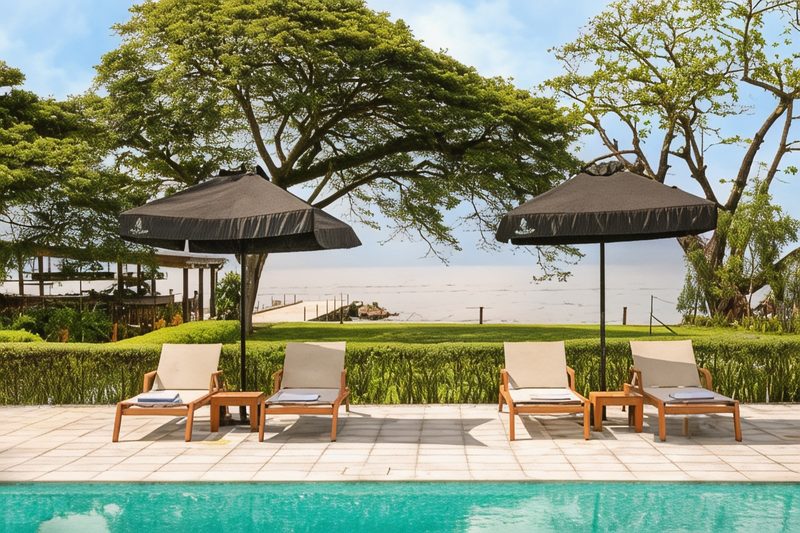
Hand-picked hotels across price tiers for January travellers.
Public Holidays in January
Dates that affect opening hours, transport and crowds
New Year's Day
Observed nationwide as a public holiday.
New Year's Day
Observed nationwide as a public holiday.
Packing Checklist
Bookmark this page — your progress is saved between visits
Need the full list with shopping links?
Climate-specific gear, brand recommendations, and what to leave at home.
View Honiara Packing List →Essential Tips
Insider knowledge and common pitfalls to avoid
Insider Knowledge
The boat schedules at Point Cruz wharf are theoretical. Departures to Savo, Tulagi, and the Western Province happen when the boat is full or the captain decides conditions are right, not when the posted timetable says. Build at least a full buffer day into any inter-island plan. Never book an international flight home the day after a planned island return. Plan ahead.
Betel nut is the social lubricant of Solomon Islands, chewed by most adults with lime powder and pepper leaf until lips and teeth stain red. You will be offered it constantly. Declining politely is fine, the offer itself is the gesture. If you try it, expect a mild stimulant buzz, excessive saliva, and the taste of chalk mixed with pepper. Spit, do not swallow, and expect a numb mouth for an hour. Your choice.
Sunday in Honiara is shut. Not tourist-quiet, not reduced-hours, but closed. Markets, shops, most restaurants, fuel stations. The churches, however, are extraordinary: if you attend a service at any of the larger congregations, the choral singing alone justifies the visit. Dress modestly, covering knees and shoulders, and you will be welcomed warmly. Go to church.
The tap water in Honiara is not safe to drink. Boiled or bottled water only, and use bottled water for brushing teeth as well. Ice in drinks at smaller establishments is suspect. This is not overcaution. Gastrointestinal illness is the single most common health complaint among visitors to Solomon Islands. Avoid it.
Avoid These Mistakes
Do not underestimate the wet season. January rainfall averages 239 mm (9.4 inches), but it does not fall as gentle drizzle. Storms arrive with force, sometimes dumping 50 mm (2 inches) in under an hour, turning roads to mud and rivers to brown torrents. Travellers who plan full outdoor days without morning-only scheduling and indoor backup options lose entire afternoons staring at a tin roof. Plan flexibly.
Do not treat Honiara like a beach destination. The beaches close to town, along the coast east toward Henderson Airport, are not the postcard image of the Pacific. The water near the harbour is murky, the shoreline is often littered, and strong currents make swimming inadvisable. The good reefs and clear water are at Bonegi, a 20-minute drive west, or on the offshore islands. Arriving expecting white sand and turquoise water at your doorstep leads to disappointment. Adjust expectations.
Do not skip antimalarial medication. Guadalcanal has active malaria transmission, and January's wet season is peak mosquito breeding time. Some travellers assume the risk is theoretical or that repellent is sufficient. It is not. Prophylaxis is strongly recommended by every credible travel health authority for this destination and this month specifically. Take the pills.
Short on time? See day trips around Honiara on GetYourGuide.
Ready to plan your trip to Honiara?
Now that you've got the research covered, here's where to go next.
Explore More Activities in Honiara
Didn't see anything interesting yet?
Browse Viator's full catalog of tours, day trips, food experiences, and private guides in Honiara.
See All Honiara Tours on Viator