Things to Do in Honiara in November
November weather, activities, events & insider tips
Low Season · Budget Friendly
November Weather in Honiara
Long-run averages for November
89°F (31°C)
High Temp
73°F (22°C)
Low Temp
5.7 inches (145 mm)
Rainfall
79%
Humidity
14
Sunny-Day UV
⚠ South Pacific cyclone season officially begins in November. Direct cyclone landfalls on Guadalcanal this early in the season are uncommon. Tropical depressions and their associated storm surges can still develop with limited forecasting lead time. These disrupt inter-island boat travel for days at a stretch. Plan buffer days. Check marine forecasts daily.
⚠ Dengue fever transmission increases as standing water accumulates through the wet season onset. No widely available vaccine exists for travelers. Prevention depends entirely on rigorous mosquito-avoidance measures. Use DEET repellent. Wear long sleeves between dusk and dawn. Pack insecticide-treated clothing.
⚠ Flash flooding occurs along the Mataniko River corridor and in low-lying areas of central Honiara during heavy downpours. Avoid river crossings during or immediately after intense rainfall. Check with locals about trail conditions before attempting the Mataniko Falls trek on days with morning storms. Conditions change fast. Ask first.
Making the most of November in Honiara? Browse tours and activities in Honiara on GetYourGuide.
Is November Right for You?
Weigh the advantages and considerations before booking
Advantages
- + November's 79% humidity sets the joint-lowest mark for the year. September shares this rank. Honiara feels far more comfortable than the crushing 87% reading in January. The air clings to your skin like a damp towel when you exit Henderson International. Walk the coastal road from Point Cruz toward Chinatown anyway. You will not feel like you breathe through wet cotton. Pack light clothing. The humidity will pass quickly.
- + Rainfall sits at 145 mm (5.7 inches). This amount covers roughly half the December-through-March deluge. Storms gather after midday. They break hard for thirty to forty-five minutes. Skies clear to copper-tinged evenings over Iron Bottom Sound. Mornings stay wide open. Visit the battlefield sites. Explore Bonegi Beach.
- + Honiara draws few visitors during peak dry-season months. November thins those numbers further still. The American Memorial sits above Skyline Drive. Corroded Japanese transports rest at Bonegi. Fish stalls operate at the Central Market. You will hold these spaces largely to yourself. The atmosphere shifts completely. Solitude changes everything.
- + Early wet-season rains push river levels higher. The ridgeline jungle behind Honiara turns an almost aggressive green. Mataniko Falls runs with real force after the drier months. Spray reaches you long before you spot the cascade through the canopy. The contrast between the deep interior forest and the grey-blue waters of the Sound hits its peak. Nature looks dramatic here. Trust your eyes. The view stays sharp.
Considerations
- − November opens the South Pacific cyclone season. Direct landfalls on Guadalcanal this early remain uncommon. Most systems develop later. Peak activity occurs January through March. Peripheral weather bands still cause trouble. They bring multi-day grey skies. Seas grow rough enough to cancel boat trips to Savo Island or the Florida Islands. Warnings arrive quickly.
- − Freshwater runoff from increasing rain muddies the near-shore waters. Dive visibility drops at Bonegi and across Iron Bottom Sound. Readings fall from the dry season's 20-30 metres (65-100 feet) to a murkier 10-15 metres (33-50 feet). Wreck diving remains workable. You lose the clarity that makes dry-season dives feel cinematic. The water turns opaque. Adjust your expectations. Bring a dive light.
- − Mosquito activity spikes as standing water accumulates in Honiara's poorly drained lower neighborhoods. Dengue transmission in the Solomon Islands rises through the wet season. Usual precautions around repellent and long sleeves after dusk become non-negotiable. Advisory status no longer applies. Stay covered. Apply bug spray often. Protect your skin.
Settled on November? Compare hotel prices in Honiara for your dates on Trip.com.
Best Activities in November
Top things to do during your visit
November in Honiara arrives with the feeling of a season turning. The dry months of June through September have faded. Afternoon clouds begin stacking higher above the ridgeline behind the capital, bruise-dark and heavy with rain that falls in sharp, warm bursts rather than the day-long downpours that define January and February. Average highs hold at 31°C and lows around 22°C, which means the air never quite cools even after dark, and the scent of wet earth and frangipani hangs along Mendana Avenue well into the evening. Rainfall averages around 145 millimetres for the month, roughly triple what September delivers but barely half of what December will bring, placing November in a transition window where mornings often dawn clear and bright before the cloud towers build after midday. The harbour dominates Honiara's daily rhythm year-round, but in November the water takes on a particular glassy calm in the early hours, broken only by the slap of outrigger canoes heading toward the reef. The central market on the waterfront fills from dawn with women selling betel nut, cassava, and reef fish still gleaming with salt water, their voices carrying in the humid stillness. Because Honiara sits on the north coast of Guadalcanal and faces a sheltered sound, sea conditions tend to remain manageable through this transitional period, making boat trips to Savo Island and Bonegi Beach more reliable than in the full wet season ahead. Evenings in Honiara are quiet by the standards of any Pacific capital. Most social life revolves around a handful of hotel restaurants and waterfront spots where the smell of grilled tuna drifts across outdoor tables. November is not peak tourist season here, and that absence of crowds means the WWII memorial sites, jungle trails, and reefs around Honiara feel close to private.

East Honiara Historic World War II Battlefields Tour
culturalThe East Honiara Historic World War II Battlefields Tour traces the arc of the 1942-43 Guadalcanal Campaign across sites that most visitors would never locate on their own, from the rusted hulks of landing craft half-swallowed by jungle along the Tenaru River to the silent ridgelines where marines and Japanese soldiers fought at close quarters in suffocating heat. A guide walks you through Bloody Ridge, Henderson Field, and the memorial gardens where faded plaques sit beneath rain trees whose roots have crept over foxhole lines, while overhead the shrill calls of honeyeaters break the stillness that now covers ground that once shook with artillery. Standing at the Guadalcanal American Memorial on Skyline Ridge above Honiara, the view sweeps across Ironbottom Sound, the strait where dozens of warships lie on the seabed, the water appearing deceptively serene and turquoise from this elevation.
This is one of the few places on earth where the physical terrain of a pivotal Pacific War campaign remains largely unaltered, with rusted ordnance, overgrown gun emplacements, and jungle-choked ridgelines that let you comprehend the battle's geography in a way no book or documentary can replicate.
Insider tip: Ask your guide to stop at the Japanese war memorial near Mount Austen, which sits off the standard route and receives almost no visitors. The stone monument in a clearing surrounded by towering mahogany trees has a perspective on the campaign that the American-facing sites do not, and the quiet there is profound.
This month: November's transitional rainfall means trails at sites like Bloody Ridge can be slippery after an afternoon downpour. Wearing shoes with good grip matters more now than in the dry months of July through September.

Honiara City-Half Day City Tour
guided_experienceThe Honiara City Half Day Tour condenses the capital's compact geography into a guided sweep that starts at the waterfront Central Market, where the smell of smoked fish and fresh lime hits before you even step under the corrugated-iron roof, and moves through the quiet grounds of the National Museum, Parliament House, and the Chinatown district where small trade stores line narrow streets with hand-painted signage. Honiara is not a city that announces its character with grand architecture. Its texture reveals itself in the details a guide can decode, from the significance of shell money displayed at the museum to the stories behind the WWII relics embedded in the landscape around Point Cruz. The route passes the botanical garden where orchids and breadfruit trees crowd a hillside path, the air thick with the green, vegetal scent of tropical undergrowth, and typically finishes with a vantage point overlooking the harbour where inter-island ferries load cargo for the Western Province.
Honiara makes little sense without context, and this tour provides the cultural and historical framework that turns a small, seemingly utilitarian Pacific capital into a place whose layers of Melanesian, colonial, wartime, and post-independence identity become legible.
Insider tip: The Central Market is best experienced at the tour's start rather than as an afterthought. Arrive when the fish vendors are still laying out the morning catch on palm-leaf mats and the betel-nut sellers are stacking their neat pyramids of green nuts and coral-lime powder, a combination whose sharp, chalky scent is unmistakably Honiara.

Airport Transfers from Honiara International Airport to Hotel
transportThe airport transfer from Henderson International Airport into central Honiara covers roughly ten kilometres of coast road, and what could be a purely logistical ride doubles as a first encounter with Guadalcanal's character: the crumbling seawall along the shore, coconut palms leaning over rusted wartime debris at Bonegi, and the salt-tinged breeze through the vehicle window as the road passes fishing villages where children wave from the roadside. Henderson Airport itself is named for the marine aviator Lofton Henderson and sits on the airfield that was the strategic prize of the entire Guadalcanal Campaign, a fact the driver can elaborate on if asked. Having a pre-arranged transfer eliminates the uncertainty of negotiating a fare at the small, often crowded arrival hall where taxis cluster without meters or marked rates.
Arriving in a remote Pacific capital with ground transport already sorted removes the one logistical friction point that trips up first-time visitors to Honiara, and the ride itself has a ten-minute visual introduction to the island's landscape before you have even checked in.
Insider tip: Confirm your pickup the day before arrival by contacting the operator directly, as flight schedules into Honiara shift frequently. If your flight arrives after dark, the unlit coast road makes this pre-arranged option substantially more practical than finding independent transport.
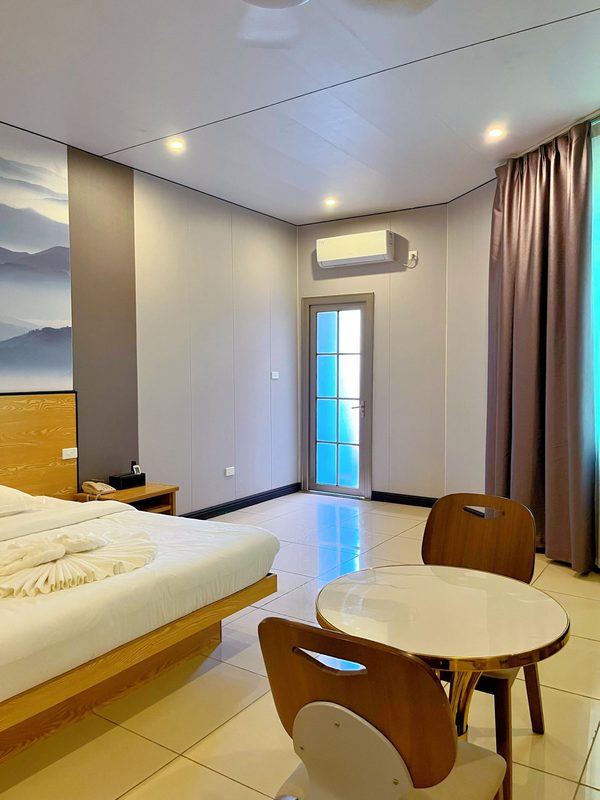
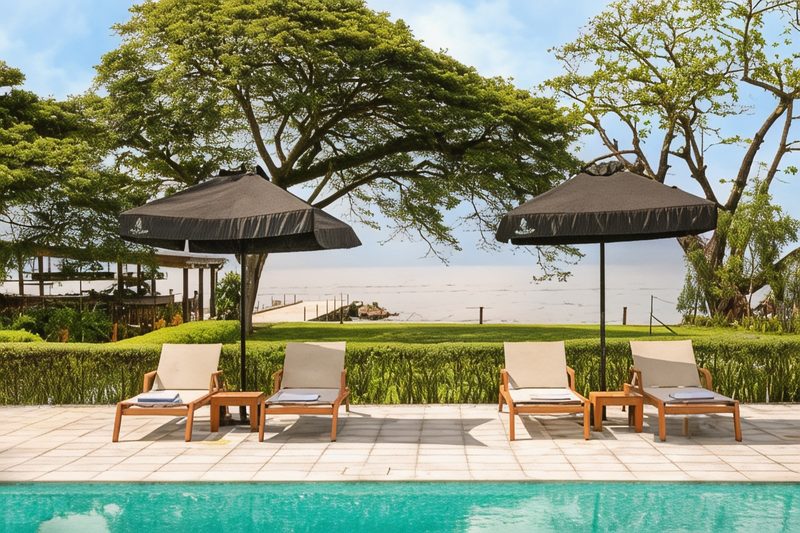
Where to Stay in Honiara in November
Hand-picked hotels across price tiers for November travellers.
Packing Checklist
Bookmark this page — your progress is saved between visits
Need the full list with shopping links?
Climate-specific gear, brand recommendations, and what to leave at home.
View Honiara Packing List →Essential Tips
Insider knowledge and common pitfalls to avoid
Insider Knowledge
Honiara's reputation for safety concerns mostly traces to the civil unrest of 1998-2003 and the politically driven 2021 Chinatown riots. Neither targeted visitors. Day-to-day, the city is safe enough if you exercise the kind of awareness you would in any developing-world capital. Walk with locals rather than alone after dark. Keep valuables locked at your accommodation. Avoid the settlement areas east of the Mataniko River bridge at night. The Central Market area sees occasional bag-snatching during the morning crush. Travel light. Keep your hands free.
There is no meter taxi system or ride-hailing app in Honiara. Transport runs on shared minibuses that follow loosely fixed routes along the coastal road, or on negotiated-fare private cars arranged through your accommodation. If you are planning battlefield tours or the Savo Island crossing, sort your driver and boat the day before. Trying to find reliable transport on the morning of your excursion wastes half the day and usually costs more. Book early.
The Solomon Islands are Christian. Sunday in Honiara is noticeably quiet. Most shops close. Public transport thins to almost nothing. The sound of four-part hymn singing carries from every neighborhood church across the still morning air. Plan your Central Market visits and supply runs for weekdays. Across Guadalcanal, customary land ownership governs access to waterfalls, beaches, and WWII sites on village land. A small kastom fee to the landowners is standard practice and not optional. Your guide handles these. Showing up without a guide signals disrespect that no amount of money fixes. Hire local.
Flight connections to Honiara run through Brisbane, Nadi, and Port Moresby with limited frequency. Solomon Airlines and Fiji Airways are currently the main carriers operating these routes. November tends to see lower booking pressure compared to the June-through-September dry season, which gives you slightly more flexibility on dates. That said, book your return flights before arriving. Same-week availability out of Henderson International is never guaranteed. If your flight cancels the alternatives are measured in days, not hours. Confirm everything.
Avoid These Mistakes
Do not assume Honiara operates like a Southeast Asian beach destination. There are no resorts. There are no tuk-tuks. There is no tourist infrastructure in the conventional sense, and no reliable way to arrange things after you land. Travelers who show up without pre-arranged accommodation and ground transport face real logistical problems, not minor inconveniences. The Solomon Islands reward planning in a way that improvisation-friendly destinations do not. Prepare thoroughly.
Do not underestimate the sun because of cloud cover. November's overcast mornings feel deceptively mild at 31°C (89°F), but the equatorial UV penetrates cloud and the angle is nearly vertical. Sunburn develops fast, above all on open boat crossings where the water reflection hits from below. Travelers who skip sunscreen on a grey morning are reliably the ones limping by evening. Apply liberally.
Avoid drinking tap water or eating raw unwashed produce from market stalls. Honiara's municipal water supply is not reliably treated. Gastrointestinal illness is the single most common health complaint among visitors. Stick to sealed bottled water. Eat the cooked food from the Central Market's hot-food stalls where you can watch it come off the fire. Drink the fresh coconuts that vendors split open with a machete on the spot. The water inside those is safe and the best rehydration available. Choose wisely.
Short on time? See day trips around Honiara on GetYourGuide.
Ready to plan your trip to Honiara?
Now that you've got the research covered, here's where to go next.
Explore More Activities in Honiara
Didn't see anything interesting yet?
Browse Viator's full catalog of tours, day trips, food experiences, and private guides in Honiara.
See All Honiara Tours on Viator