Things to Do in Honiara in April
April weather, activities, events & insider tips
Low Season · Budget Friendly
April Weather in Honiara
Long-run averages for April
88°F (31°C)
High Temp
73°F (23°C)
Low Temp
7.5 inches (190 mm)
Rainfall
85%
Humidity
13
Sunny-Day UV
⚠ Malaria transmission on Guadalcanal peaks during and immediately after the wet season. April sits within this elevated risk window. Antimalarial prophylaxis is medically essential, not a precaution. Consult a travel medicine specialist at least four weeks before departure.
⚠ Flash flooding risk persists along river valleys through April, the Mataniko and Tenaru drainages. Afternoon convective storms can raise river levels rapidly, making crossings dangerous within an hour of heavy rain upstream. Never attempt river crossings without a guide who knows the current conditions.
⚠ Equatorial UV exposure is extreme and largely invisible on overcast days. The UV index reaches 13 on clear days and remains dangerously high even under partial cloud. Sunburn and heat exhaustion are the most common medical presentations among visitors at this latitude.
Making the most of April in Honiara? Browse tours and activities in Honiara on GetYourGuide.
Is April Right for You?
Weigh the advantages and considerations before booking
Advantages
- + April marks the tail end of the wet season, with rainfall dropping sharply from March's 11.2 inches (284 mm) to 7.5 inches (190 mm). You're catching the transition month. The hills behind Honiara stay impossibly green. The Mataniko River runs strong enough to make the falls spectacular. The daily pattern has already shifted toward shorter, more predictable afternoon downpours rather than the all-day grey blankets of January and February.
- + Underwater visibility at the WWII wreck sites off Bonegi Beach and across Iron Bottom Sound tends to improve through April as the sediment runoff from the wet season rivers starts to settle. The coral gardens around Savo Island and the reefs fringing the Florida Islands come alive with cleaner water and warmer surface temperatures. You're still ahead of the June through August period. Southeasterly trade winds can chop up the surface on exposed sites then.
- + This is low season for the handful of tourists who make it to Honiara at all. The guesthouses and lodges along the coast road toward Bonegi have availability you won't find in the drier July through September window. The guides who run battlefield tours and waterfall treks are unhurried. They'll spend an extra hour with you at Edson's Ridge. They'll take a longer route through the jungle to Tenaru Falls without watching the clock.
- + The fruit season overlaps beautifully. April in Honiara means the tail of the mango season and the peak of the local pawpaw harvest. At Honiara Central Market, the stalls on the upper level are piled with golden-fleshed pawpaw, soursop, and the small, intensely sweet bananas that Solomon Islanders call karakara. The market smells like overripe fruit and wood smoke from the betel nut braziers. That smell is April in this city.
Considerations
- − The humidity at 85% is relentless. By mid-morning the air feels like warm, wet cloth against your skin, and it doesn't let up until after dark. Even short walks along Mendana Avenue leave you soaked through. The lack of widespread air conditioning outside the few international-standard lodgings means there's no reliable escape. If you overheat easily or have respiratory conditions, the wet-season humidity in Honiara is a serious comfort issue, not a minor inconvenience.
- − Afternoon rain squalls can shut down boat transfers with little warning. The crossings to Tulagi and Savo Island depend on sea conditions, and in April the combination of residual wet-season weather systems and afternoon convective storms means cancellations happen. If your itinerary depends on a specific day trip across Iron Bottom Sound, build in a buffer day. The boat operators will not run in rough conditions. They're right not to.
- − Malaria is endemic on Guadalcanal and transmission peaks during and just after the wet season. April sits squarely in that elevated window. Prophylaxis is not optional. Full stop. You'll also want to be rigorous about repellent after dusk, when the anopheles mosquitoes come out along the riverbanks and in the low-lying areas east of Point Cruz.
Settled on April? Compare hotel prices in Honiara for your dates on Trip.com.
Best Activities in April
Top things to do during your visit
April is a turning point on Guadalcanal. The heavy rains that hammer Honiara from January through March ease noticeably. Rainfall drops by nearly a third compared to the sodden weeks of February and March. The air, while still warm and close, carries a lighter quality in the mornings. Daytime temperatures hold steady around 31°C. Nights settle near 23°C, warm enough that the concrete of the capital radiates stored heat well past sunset. The shift is palpable. Puddles that stood for weeks along Mendana Avenue begin to shrink. The Mataniko River loses some of its churning brown urgency. The hillsides behind Honiara take on an almost luminous green, fed by three months of saturation now lit by longer stretches of equatorial sun. For anyone weighing when to visit Honiara, April sits in a favorable window. It is drier than the months that precede it, though not yet as parched as the June-through-September stretch when dust replaces mud on the unpaved roads east of town. The ocean visibility at nearby reefs improves as runoff diminishes. The harbor smells less of silt and more of salt and diesel from the inter-island boats loading copra sacks at Point Cruz wharf. Locals shift routines. Fish sellers at the Central Market spread their catch across palm fronds earlier in the morning. Families begin drying betel nut on corrugated iron sheets propped against fences in Vura and Kukum. Restaurants along the waterfront, a handful of Chinese-Melanesian kitchens and a couple of hotel dining rooms, fill with a mix of aid workers, provincial politicians in town for parliamentary sessions, and the occasional diver staging for the Florida Islands. Nightlife in Honiara is modest by any standard. A few bars near the casino and hotel lounges where Solbrew flows cold and conversation runs long. Safety in the capital has improved markedly since the RAMSI years, though petty theft after dark in unlit areas remains something to manage with the same urban awareness you would apply anywhere. The beaches flanking Honiara, at Bonegi to the west and along the coast toward Henderson, are coarse coral and volcanic sand. They are better for snorkeling over wreck sites than sunbathing. In April the water is bathtub-warm, flat-calm on windless mornings.

East Honiara Historic World War II Battlefields Tour
culturalThe road east from Honiara traces one of the most consequential stretches of ground in Pacific history. This full guided tour covers the ridgelines, river crossings, and rusting gun emplacements where American and Japanese forces fought for control of Guadalcanal in 1942 and 1943. You will see the banks of the Tenaru River, where coconut palms still grow over shallow foxholes, and Bloody Ridge, where the tall kunai grass hisses against your legs in the same wind that carried the sound of night attacks eight decades ago. Your guide walks you through the terrain itself. You stand where the fighting happened. You hear the cicadas that would have been the only sound between barrages. You see the corroded shell casings and overgrown tank traps that the jungle has half-swallowed. The rusted hulks of landing vehicles sit in creek beds where they were abandoned, their iron staining the water a faint orange.
Guadalcanal's battlefields are not museum reconstructions. They are the actual ground, barely changed, where the Pacific war's outcome was decided. Walking them with a knowledgeable local guide gives the landscape a weight no textbook conveys.
Insider tip: Bring sturdy closed-toe shoes with grip. The trails to several memorial sites cross muddy slopes and root-tangled paths, where April's residual moisture lingers under the canopy. The red laterite clay is slippery when wet.

Honiara City-Half Day City Tour
guided_experienceHoniara is not a city that reveals itself from a taxi window. This half-day tour threads through the places where the capital's daily life happens. You will visit the Central Market, where women from the Weather Coast and Malaita Province squat behind pyramids of sweet potato, pawpaw, and slippery cabbage. The smell of ripe tropical fruit mixes with wood smoke from the grilled fish stalls at the market's edge. The National Museum has a modest but absorbing collection of war relics, shell-money coils, and carved canoe prows blackened with soot from decades of ceremonial use. The Chinatown quarter along the river has corrugated-iron shopfronts that sell everything from tinned mackerel to hand-woven baskets. The guide contextualizes what you see. You will learn why the parliament building sits where it does on a ridge above the harbor. You will learn what the Solomon Islands flag's colors signify against the nation's independence story. You will learn how Honiara rebuilt after the 2006 riots scarred whole blocks of the commercial district.
A guided city tour compresses Honiara's layered history, colonial outpost, wartime logistics base, young nation's capital, into a coherent half day. It connects sites you would otherwise walk past without understanding.
Insider tip: Ask your guide to include a stop at the Solomon Islands National Parliament when it is not in session. The building's carved wooden panels, depicting traditional Melanesian motifs, are among the finest examples of contemporary Solomon Islands woodcraft. Few visitors think to enter.

Airport Transfers from Honiara International Airport to Hotel
transportHenderson International Airport sits about eleven kilometers east of central Honiara, connected by a single paved road that passes through Kukum and the eastern suburbs. Arriving travelers step off the plane into thick, humid air that smells of frangipani and jet fuel. The terminal, a low-slung building with open-air corridors, offers limited onward transport options. A pre-arranged transfer eliminates the negotiation that greets every arrival. Your driver meets you in the small arrivals hall, handles luggage into an air-conditioned vehicle, and navigates the potholed stretches and occasional speed bumps that punctuate the drive into town. For travelers continuing to hotels west of Honiara toward Bonegi, the transfer covers a longer route that skirts the harbor. You will pass fishing canoes pulled up on the foreshore and the rusted bow of a beached cargo vessel that has become an informal Honiara landmark.
Honiara has no ride-hailing apps and no metered taxis. A pre-booked airport transfer is the only way to guarantee a fixed, agreed fare and a vehicle that is waiting when you land.
Insider tip: Confirm your flight arrival time with the transfer provider the day before. Domestic connections from other provinces frequently run late. Henderson's small scale means drivers sometimes leave if a flight appears delayed.
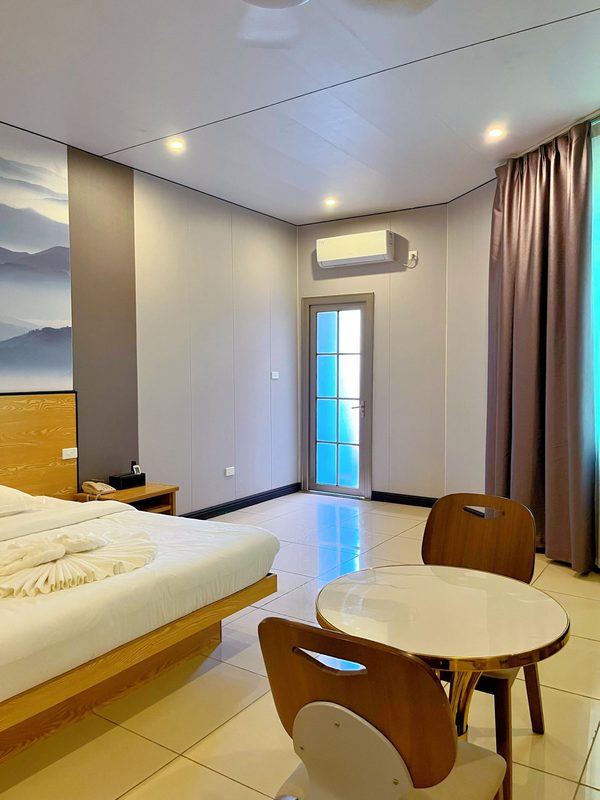
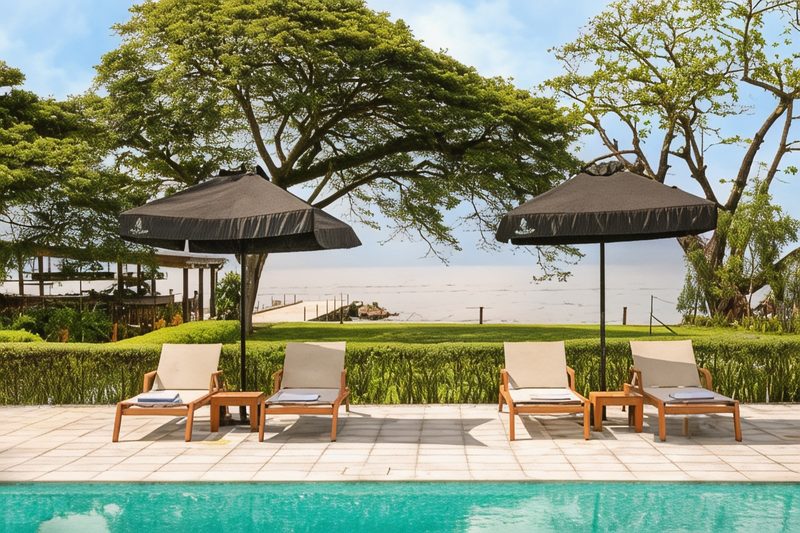
Where to Stay in Honiara in April
Hand-picked hotels across price tiers for April travellers.
Public Holidays in April
Dates that affect opening hours, transport and crowds
Good Friday
Observed nationwide as a public holiday.
Holy Saturday
Observed nationwide as a public holiday.
Easter Monday
Observed nationwide as a public holiday.
Packing Checklist
Bookmark this page — your progress is saved between visits
Need the full list with shopping links?
Climate-specific gear, brand recommendations, and what to leave at home.
View Honiara Packing List →Essential Tips
Insider knowledge and common pitfalls to avoid
Insider Knowledge
Saturday morning at the Central Market is the experience, not a weekday visit. The Weather Coast women arrive Friday evening by boat and set up overnight, so Saturday by 6 AM the fish section is at peak chaos and the shell-money jewellery sellers have their best stock out. By Sunday afternoon the stalls are thinning and the energy is gone. Get there at dawn, bring small-denomination bills, and expect to spend two hours just absorbing the sensory overload before you buy anything.
The stretch of coast road between Point Cruz and Bonegi Beach is Honiara's real social corridor. In the late afternoon, as the heat starts to break, families gather on the seawall, kids splash in the shallows, and the smell of grilled fish drifts from the roadside cook fires. Walking this road between 4 PM and 6 PM tells you more about how Honiara lives than any organised tour. The same stretch after dark is a different proposition: stick to well-lit sections or take transport.
Iron Bottom Sound's name is not metaphorical. The seabed between Guadalcanal, Savo Island, and the Florida Islands holds an estimated 50 warships and transports from the 1942-43 naval battles. Most are in deep water beyond recreational dive limits. But the wrecks at Bonegi Beach sit in snorkelling depth, and on a calm April morning you can float directly above Japanese hull plates crusted with coral and watch reef fish move through compartments where sailors died eighty-five years ago. The emotional weight of that is real. Prepare yourself for it.
Honiara after dark is not a city with an established nightlife circuit in the way that a visitor from Sydney or Auckland might expect. What exists is concentrated around Point Cruz and a handful of establishments along Mendana Avenue that serve cold SP Lager and play Solomon Islands reggae at volume. The atmosphere is friendly but the infrastructure is minimal, streets are poorly lit, and solo walking after dark is inadvisable regardless of gender. The smarter move is sundowners at a waterfront spot where you can watch the light die over Savo Island's silhouette, then transport back to your accommodation.
Avoid These Mistakes
Underestimating the logistical reality of island travel from Honiara. Visitors assume they can hop between islands the way you might in Fiji or Vanuatu. But Solomon Islands has minimal scheduled inter-island transport, weather-dependent boat services, and limited domestic flights. Everything takes longer than you expect, and April's residual wet-season weather adds another layer of uncertainty to boat crossings. Build slack into every plan.
Skipping malaria prophylaxis because the trip is short. Guadalcanal has active malaria transmission year-round with a wet-season peak that extends into April. A three-day visit is long enough to contract it, and symptoms can appear weeks after you've returned home. No prophylaxis, no trip. Consult a travel medicine clinic at least four weeks before departure.
Treating the WWII battle sites as casual photo opportunities without understanding the cultural dimension. These sites sit on customary land belonging to Solomon Islander communities whose ancestors lived through the fighting. Showing up without a guide, without landowner permission, and without a basic understanding of what happened there is disrespectful in ways that will be communicated to you clearly. The history is extraordinary but it is not yours to consume casually.
Short on time? See day trips around Honiara on GetYourGuide.
Ready to plan your trip to Honiara?
Now that you've got the research covered, here's where to go next.
Explore More Activities in Honiara
Didn't see anything interesting yet?
Browse Viator's full catalog of tours, day trips, food experiences, and private guides in Honiara.
See All Honiara Tours on Viator